
🕒 6 min read
Behind every story we share, there is a support worker working tirelessly to help that person to reach stability and security. Often working under intense pressure, frontline staff provide a vital service to those experiencing, or at risk of homelessness. They support people to navigate the housing system, rebuild confidence and move forward at a pace that suits their needs.
In our latest Christmas Appeal, three of those support workers are Audrey, Marina and Barry. They all work on the frontline of homelessness, each within a different organisation in different regions of the UK. But they all play a crucial role in helping people move out of crisis and towards a stable home. Through their work with Gary, Mensah* and Devon, they highlight what tailored, person-centred support looks like in practice, and how change happens through building sustained relationships.
This blog looks at the role of those support workers, the organisations they work for, and why their work matters more than ever in a housing system under strain.
Before we get started
Before we get started
If you’d like to learn more about how we support people at risk of or experiencing homelessness, join our newsletter for the latest updates—and consider making a donation to help us continue this vital work.
The Role of Support Workers in People’s Journeys Out of Homelessness
The Role of Support Workers in People’s Journeys Out of Homelessness
We see every day the essential role that support workers play in supporting people experiencing homelessness to move into stable homes. In times of uncertainty, frontline staff provide a consistent relationship to guide people through a system that can feel complicated or overwhelming.
Support workers in the homelessness sector cover many different areas of support. They work alongside their clients, listening to individual needs.
Support can include assisting with complex housing applications or benefits systems, booking health appointments and explaining legal processes. Eligibility rules, long waiting times and administrative barriers can stall progress or cause housing offers to fall through altogether, but support workers are there to help people understand their options, advocate on their behalf, and keep things moving forward when issues arise.
An important aspect of the role is building a relationship with the client. The path out of homelessness is rarely straightforward. Some people may face delays, or have to pause to deal with trauma, ill health or overcome practical barriers. Trauma-informed approaches recognise this reality. Support workers adapt their approach to each person’s pace, needs and goals, building trust over time and supporting people to make decisions that work for them.
Research consistently shows that sustained, person-centred support improves housing stability and wellbeing, particularly when combined with practical help to secure and sustain a home.
How Support Workers Are Making a Difference in People’s Lives
Support workers in the homelessness sector provide a vital service, helping people to access stable housing, essential services, and avoid returning to the streets. They work with people who are rough sleeping, living in temporary accommodation, or people who are at risk of homelessness. Support roles often involve working in hostels, community outreach, or with local council housing teams.
In our recent Christmas Appeal, we spotlighted three stories of people who were helped into finding a place to call home. Key to their progress was targeted, person-centred support from frontline workers who listened to each individual’s needs and worked alongside them to overcome practical and emotional barriers. Below, we focus on the support workers themselves, and the roles Audrey, Marina and Barry played in helping people move out of homelessness.
Make a difference – donate today.
Audrey and Gary
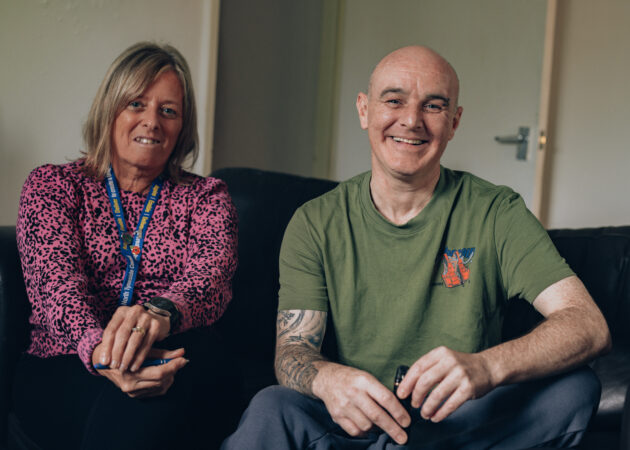
When Gary approached his local council after leaving the family home, he was referred to Audrey, a Private Rented Access Officer at North Tyneside Council, based in Newcastle. Audrey has worked in the role for 16 years, supporting people to access housing in an increasingly pressured private rented sector.
Firstly, Audrey made sure Gary was safe and supported, and quickly secured temporary accommodation to prevent him from sleeping rough. But over the following months, Gary was moved repeatedly between hotels and B&Bs. Audrey told us that this instability is common for single people while councils try to assess housing options. B&B placements can change daily, and permanent temporary accommodation is often full. Audrey also supported Gary with the practical challenges that come with homelessness. She ensured his benefits were maximised, referred him to Citizens Advice to address existing debts, helped him set up utilities and worked with local food banks during periods when Gary had no food.
“He knows that I’m at the end of the phone. Whatever query he has, I’ll try and refer him if I can’t deal with it.” – Audrey
For three months, Audrey searched for suitable private accommodation. She told us that finding landlords willing to accept tenants on low incomes is increasingly difficult, as many of them are selling their properties or imposing high upfront costs. Eventually, a property became available with a landlord that Audrey had worked with previously. But to secure the property, Gary needed £490 for rent in advance and a damage bond, which he could not afford.
That’s when Audrey applied for an emergency grant at St Martin-in-the-Fields Charity, which was approved in just two days. That speed made all the difference. Gary was able to move into a flat close to his children, and said he is “chuffed” to have his own flat. Reflecting on the change, Audrey says, “The difference I see in Gary from a year ago is amazing. Gary was frightened before… then he picked things up and he’s been amazing.”
Gary summed up just how important Audrey was to his journey: “I cannot fault her. If it wasn’t for Audrey, I don’t know where I’d be now. She’s been a massive support. I couldn’t have done it without her, to tell you the truth.”
Marina and Mensah*
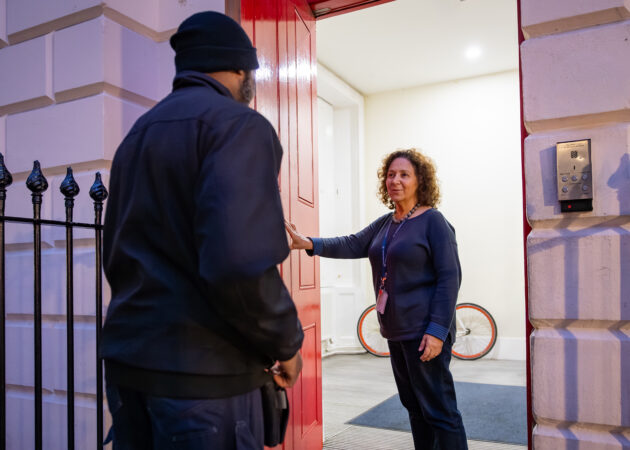
Mensah (not his real name) was referred to The Connection at St Martin’s after being forced to sleep rough in central London. He had spent the past year homeless following a no-fault eviction, after complaining about the poor conditions of his flat. When he arrived at The Connection, he was determined to keep working and move forward. The first step was to find somewhere safe to live, and The Connection was able to find him a room in a shared house, where he feels safe and comfortable.
Marina, a Skills and Opportunities Coordinator at The Connection, began supporting Mensah after her colleagues identified that he would benefit from employment support. Marina was immediately struck by his resilience. Despite being homeless, Mensah had managed to hold onto a retail job, something Marina describes as “a real strength of character and determination.”
Marina’s approach focuses on understanding the whole person. She explained: “The first thing I usually do when I get to know the client is start with the CV. Whilst they talk to me about their work history, they also tell me about their lives.” She discovered that although Mensah had achieved strong results across GCSE, A Level and higher education, he had lost all his certificates. So they got in touch with the schools and exam boards to secure copies, and The Connection was able to cover the admin costs.
Having tangible proof of his achievements became a turning point for Mensah, helping rebuild confidence at a time when money was tight.
Meanwhile, Marina also secured practical support that removed barriers to work. She helped cover Mensah’s transport costs for interviews, supported applications, and ensured he had essential equipment for his construction apprenticeship, including boots, a helmet and work trousers. When Mensah explained that he found interviews challenging due to his autism, Marina practised interview techniques with him until he felt more confident and knew what he wanted to say on his own behalf. Eventually, with Marina’s support, he was able to secure a construction apprenticeship, which he loves.
Today, Mensah is thriving in his apprenticeship and has a stable home where he feels safe. Reflecting on their work together, Marina says, “Mensah already had very clear ideas and just needed a bit of signposting to go where he needed to go. He was very skilled, very articulate and determined. We just built on that really.”
Barry and Devon

Devon met Barry, a support worker at Aspire Oxford, after leaving prison and experiencing rough sleeping in Oxford. With no stable accommodation and poor mental health, Devon was in need of long-term, practical support to rebuild his life.
Barry got started straight away, helping Devon secure ID, get onto the housing register, and access Aspire’s supported housing project. As Devon moved into their supported housing, Barry ensured he had the essentials: “First we made sure he had everything he needed, like a bed, all the items he needed for his room. If he needed something specific, then we’d ask him.” Devon stayed with Aspire for around a year. Barry told us that the process can be slow and system-heavy, with housing registers often taking a year to 15 months. Over time, Devon found stable employment at a recycling centre, eventually working his way up to area manager.
When Devon was eventually offered his own flat, new challenges arose. The property was completely empty, and the costs mounted quickly, with bills, flooring expenses and existing debt all adding up. With Barry’s help, Devon applied to the Personal Grants project, which is part-funded by St Martin’s Charity. His application was successful, and he received a direct cash transfer allowing him to furnish his home, pay bills in advance and even clear his credit card debt.
“It was a relief [for Devon] because he had some bills and a new property to move into and it was all massing up and he was thinking of all the ways to fund this. And it was a big surprise for him when he won [the grant], and he was able to clear the decks a bit.” – Barry
Barry’s role isn’t just about administration, but also providing emotional support. Devon describes him as the person he turns to when he feels anxious or overwhelmed: “If I’m stressed, he’s the first person I call… He calms me down if I’m getting too much anxiety or stuff like that, he knows how to lead me in the right direction. So I look up to him, 100%.”
Looking back, Barry says he is proud of all the progress that Devon has made. He explained: “He’s not ringing me as often, which is a good thing! For me, that tells me that he’s now settled and looking towards his future.”
Pressure on the Frontline: What Support Workers Are Telling Us
Each year we ask frontline workers across the UK to share their thoughts and experiences through our Frontline Worker Survey, enabling us to amplify their voices and allow them to help shape future policy and practice. Our 2025 survey revealed that most frontline staff (85%) have seen an increase in demand for their service in the last 12 months. And 80% think that the homelessness situation will get worse in the coming years.
This rising demand is placing significant strain on frontline workers, with many reporting that the pressures they face are directly affecting their wellbeing and outlook.
A majority of the workforce feel they are at risk of burnout (57%) and only 27% feel hopeful about the future of their job. In addition, 51% reported that their role is having a negative impact on their wellbeing, with only 34% agreeing that their pay adequately covers their living costs.
“We no longer prevent homelessness as there are no funds to do so, we just deal with the immediate crisis. We go round in circles. Due to budget constraints, we are under constant funding pressure to reduce costs and cut numbers. This means screening homeless people, trying to avoid them accessing temporary accommodation and also cutting staff.” – Local government worker in West Lothian
What Needs to Change
The experiences shared by Audrey, Marina and Barry reflect what frontline workers across the UK are telling us. Through our latest Frontline Worker Survey, staff described systems under strain, rising demand, and the toll this takes on both people experiencing homelessness and those supporting them.
Based directly on what frontline workers are telling us, we have developed a set of recommendations for decision-makers.
Housing people can access and sustain
Frontline workers are clear that homelessness cannot be resolved without appropriate, affordable accommodation. This includes:
- More self-contained homes that reflect the level of demand and need
- Local Housing Allowance rates aligned with real local rent levels, so people can realistically access private rented housing
- Address barriers in private renting, including unaffordable guarantor requirements and rigid affordability rules
Without this, support workers are left managing crisis rather than helping people move forward.
Homes that are ready to live in
Housing offers can fall through, or lead to repeat homelessness, when people lack the essentials needed to move in. Frontline workers consistently highlighted the need for:
- Accommodation that is ready to move into
- Access to basic items such as furniture, white goods and flooring
- Practical support during the move-in period to help sustain tenancies
Systems that enable support, not bureaucracy
Many frontline staff reported that excessive administrative burden reduces the time they can spend in direct, relational work. Workers called for:
- Proportionate and accessible application, referral and reporting processes
- Systems designed around people’s needs, not organisational convenience
Reducing bureaucracy allows skilled staff to focus on the work that makes the greatest difference.
A workforce that is valued and supported
Frontline homelessness work is skilled, emotionally demanding and increasingly complex. Workers told us that meaningful change requires:
- Long-term, sustainable funding that supports prevention, rather than crisis response
- Fair pay and job security, with the Real Living Wage as a minimum benchmark
- Clear training, accreditation and career pathways to recognise homelessness work as a profession
- Guaranteed minimum standards for wellbeing and safety, including protected time for reflective practice and access to trauma support
Supporting frontline workers is not optional, it’s essential in order to deliver effective homelessness services.
You can help support frontline workers by making a donation today.
Support frontline workers changing lives.